
Two Property-Tax Questions Are on the Ballot. Here's the Difference. |
One would renew funding for Broward schools. The other proposes statewide changes that could affect Coral Springs' finances. |
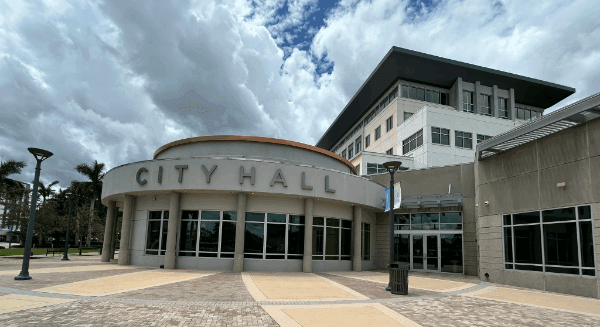
Coral Springs voters reviewing their November 3 ballots will find two questions involving property taxes.
One asks whether to continue an existing tax supporting Broward County's public schools.
The other proposes broader changes to Florida's property-tax system.
Both concern property taxes, but they involve different government budgets, different rules, and different decisions.
Here's what separates them.
Broward School Tax Referendum: Renewing an Existing Levy
Broward County Public Schools is asking voters to renew its existing one-mill property-tax levy for another four years, from January 1, 2027, through December 31, 2030.
The levy was approved by voters in 2022 and is scheduled to expire at the end of 2026.
This is a renewal at the existing one-mill rate, not a proposal to add another mill.
One mill equals $1 in annual taxes for every $1,000 of School Board taxable property value.
For a property with a School Board taxable value of $400,000, that works out to $400 annually.
According to the district, renewal would generate approximately $358 million annually, including about $283 million for district-operated schools and $75 million for charter schools.
The district says the money would continue supporting compensation supplements for teachers and eligible employees, school safety personnel, and student mental-health services.
The proposed allocation would devote at least 90% to employee compensation supplements, with up to 10% for school safety and essential programs, including mental-health services.
A Yes vote would renew the levy. A No vote would allow it to expire.
Approval requires a simple majority of votes cast.
Florida Amendment 3: Changing Non-School Property Taxes
Amendment 3 proposes changes to Florida's Constitution affecting property-tax exemptions, assessment limits, and local government taxation.
One major provision would increase the homestead exemption for non-school property taxes to $150,000 in 2027 and $250,000 in 2028 for qualifying homeowners.
Inflation adjustments would begin afterward.
The proposal also would reduce the maximum annual assessment increase on non-homestead property from 10% to 5%.
Additional provisions address when certain homeowners qualify for the increased exemption, procedures for further exemptions, and how counties and municipalities may use property-tax revenue.
The proposed larger homestead exemption applies to non-school property taxes.
It would not directly eliminate Broward's separate school-tax levy.
The amendment would take effect January 1, 2027, if approved.
A Yes vote would approve the constitutional changes.
A No vote would reject them.
Unlike the school referendum, Amendment 3 requires at least 60% voter approval.
What the Difference Means for Coral Springs
The statewide amendment has a potential financial consequence for the city itself.
Coral Springs estimates that Amendment 3 could reduce its annual property-tax revenue by approximately $14.5 million in 2028 and $26.9 million in 2029.
Those are projections, not announcements that particular programs or services will be eliminated.
The city identifies property taxes as an important source of support for municipal operations, including parks, recreation, senior programs, infrastructure, neighborhood improvements, and other services.
Coral Springs Insider explored that relationship in our earlier article, What Property Taxes Pay for in Coral Springs.
But the November ballot introduces a separate question about school funding.
The school district and the city are different taxing authorities.
Their property-tax revenues support different responsibilities.
That means the two ballot questions are not interchangeable.
Renewing Broward's school levy would not determine whether Amendment 3 passes.
Likewise, approving Amendment 3 would not automatically renew or eliminate the school levy.
Two Decisions Worth Considering Separately
The school referendum asks whether voters want an existing source of education funding to continue for another four years.
Amendment 3 asks whether Florida should adopt broader changes to non-school property taxation, with potential consequences for homeowners and local government finances.
Even the approval requirements differ: a simple majority for the school referendum and 60% for the constitutional amendment.
Residents can review the official ballot language and their personalized sample ballot through the Broward County Supervisor of Elections.
Early voting is scheduled for October 19 through November 1.
Election Day is Tuesday, November 3.
The two measures share a subject, but they don't ask voters to make the same choice.
Understanding that distinction is a useful place to begin.
Question:
Which considerations matter most to you when evaluating the two property-tax questions?
Share your thoughts in the comments below.
----------
This story is part of The Bright Side, which is an ongoing series from Coral Springs Insider that highlights positive developments and community moments around Coral Springs.
Editor's note: This piece was selected and adapted for Coral Springs Insider to provide local context and perspective on an issue relevant to our community. |
0 Comments
Join the conversation
Be the first to comment
Share your thoughts above.