
Your Home Isn't in a High-Risk Flood Zone. Citizens May Still Require Flood Insurance. |
Starting in 2027, the final phase of Citizens' flood-coverage requirement reaches eligible policies regardless of dwelling value. |
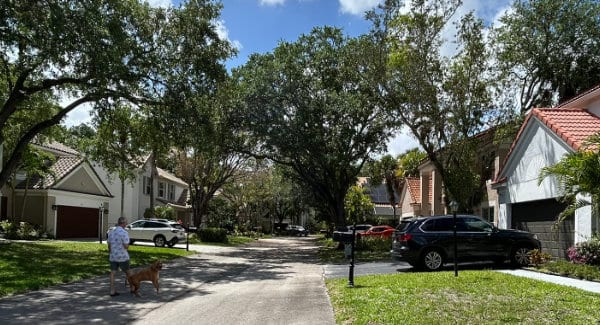
For Coral Springs homeowners who don't live in a designated high-risk flood zone, flood insurance may seem like an optional expense.
But for some customers of Citizens Property Insurance, that distinction will no longer determine whether they need flood coverage to keep their homeowners policy.
Beginning January 1, 2027, Citizens' phased flood-insurance requirement reaches its final stage.
Most eligible residential policies that include wind coverage will need separate flood insurance, regardless of the property's dwelling coverage amount.
The change could matter to homeowners who have never been required to purchase a flood policy.
Why the Requirement Is Expanding
Florida lawmakers established the phased requirement in 2022, and Citizens began implementing it in 2023.
For homes outside designated high-risk flood areas, the requirement has gradually expanded according to the amount of dwelling coverage on the Citizens policy.
In 2024, it applied to homes with dwelling coverage of $600,000 or more.
The threshold dropped to $500,000 in 2025 and $400,000 in 2026.
Starting in 2027, that dollar threshold disappears for applicable policies.
That means a Coral Springs homeowner with a Citizens policy covering a home for less than $400,000 could face a requirement that did not previously apply.
The figure is based on the policy's dwelling coverage, commonly called Coverage A, rather than the home's market value.
Your Flood Zone May Not Settle the Question
Many homeowners associate flood insurance requirements with properties in Federal Emergency Management Agency-designated high-risk flood zones.
Those zones still matter, particularly because Citizens has already required flood coverage for applicable properties within them.
But the 2027 expansion reaches eligible properties outside those areas as well.
A homeowner could therefore be outside a designated high-risk flood zone and still need flood insurance to maintain Citizens coverage.
That is the distinction worth checking before renewal.
Not Every Citizens Policy Is Affected
There are important exceptions.
Citizens identifies condominium unit-owner policies, tenant-content policies, and policies that exclude windstorm or hail coverage as exempt from its flood-insurance purchase requirement.
The rule also does not automatically apply to homeowners insured through private companies simply because they live in Florida.
For homeowners who do fall under the requirement, Citizens does not itself provide the separate flood insurance policy.
That coverage must be obtained through an eligible outside insurer.
What Homeowners Should Check Before Renewal
For a Citizens customer, the first step is to review the current homeowners policy and confirm whether it includes wind coverage.
Next, check the dwelling coverage amount and the effective date of the next policy term.
Homeowners who already carry flood insurance should ask their agent to confirm that the coverage meets Citizens' requirements and that the necessary documentation is on file.
Citizens requires proof of qualifying flood coverage and a completed Policyholder Affirmation Regarding Flood Insurance (CIT FW01) for affected policies.
Those without flood coverage should request quotes and ask when the policy must take effect, especially because flood policies may have waiting periods.
There is also a broader cost comparison worth making.
Citizens has advised policyholders that a private homeowners policy that initially appears more expensive may become competitive once the cost of a separate flood policy is included.
That does not mean switching insurers will always save money.
It means comparing total coverage costs may be more useful than comparing homeowners premiums alone.
A Requirement Worth Knowing About Early
The January 2027 expansion does not mean every Coral Springs homeowner must immediately buy flood insurance.
It means a specific group of Citizens policyholders may need coverage they previously did not have to carry.
And because insurance eligibility depends on the details of an individual policy, the most useful next step is a conversation with the agent handling that coverage.
For homeowners who have assumed their flood-zone designation settles the issue, the coming change is a reason to check again.
Question:
Do you currently carry flood insurance, even if your home is outside a high-risk flood zone? What influenced your decision?
Share your thoughts in the comments below.
----------
This story is part of The Bright Side, which is an ongoing series from Coral Springs Insider that highlights positive developments and community moments around Coral Springs.
Editor's note: This piece was selected and adapted for Coral Springs Insider to provide local context and perspective on an issue relevant to our community. |
0 Comments
Join the conversation
Be the first to comment
Share your thoughts above.