
When City Hall Makes Room for Remembrance |
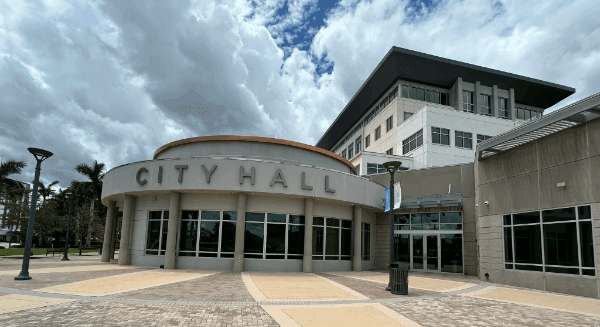
Most days, City Hall is a place for permits, meetings, and routine civic business. From time to time, though, cities choose to pause those rhythms and use the space for reflection instead.
Later this month (January 30th), Coral Springs City Hall will host The Hate Ends Now: Cattle Car Exhibit, a traveling Holocaust education installation that includes a WWII-era replica cattle car and a small collection of original artifacts.
The exhibit is designed as a guided, educational experience focused on historical context rather than spectacle.
The decision to place an exhibit like this in a civic building is deliberate. Rather than situating remembrance solely in museums or classrooms, cities sometimes bring history into public, administrative spaces — places associated with governance, responsibility, and shared values.
Public Space As a Setting for Memory
During the Holocaust, cattle cars were used to transport Jews and other targeted groups to concentration and death camps. The replica car included in the exhibit serves as a historical reference point, paired with a brief immersive presentation and docent-guided artifact displays.
But the location matters as much as the content. By hosting the exhibit at City Hall, Coral Springs is framing Holocaust education as a civic concern — not an abstract historical lesson, but something tied to public responsibility and collective memory.
This approach reflects a broader pattern seen in cities across the country, where remembrance is occasionally integrated into everyday civic environments rather than confined to designated cultural institutions.
Education Without Spectacle
The exhibit, proposed by the city’s Multicultural Committee, is structured to encourage learning and reflection without graphic detail or emotional escalation.
Visitors move through the experience with educators who provide historical context and answer questions, keeping the focus on understanding rather than reaction.
Artifacts on display include everyday items such as documents, clothing, and personal effects — objects that ground history in lived experience without sensationalizing it.
That restraint is intentional. Holocaust education initiatives increasingly emphasize clarity, accuracy, and context, particularly in public settings where audiences vary widely in age, background, and prior knowledge.
A Civic Pause, Not a Call to Action
The exhibit’s presence does not signal a shift in city policy or a broader programming agenda. Instead, it represents a momentary pause — an acknowledgment that some histories warrant space within the civic calendar simply to be recognized and understood.
Cities do this occasionally: through memorials, anniversaries, or educational installations that remind residents that public life includes reflection as well as routine.
For Coral Springs, hosting the exhibit is less about attendance numbers and more about placement — choosing to situate historical memory where civic life ordinarily unfolds. ---------- This story is part of The Bright Side, which is an ongoing series from Coral Springs Insider that highlights positive developments and community moments around Coral Springs.
Editor’s note: This piece was selected and adapted for Coral Springs Insider to provide local context and perspective on an issue relevant to our community. |
0 Comments
Join the conversation
Be the first to comment
Share your thoughts above.