
How Faster Emergency Care Often Depends on What Happens Behind the Scenes |
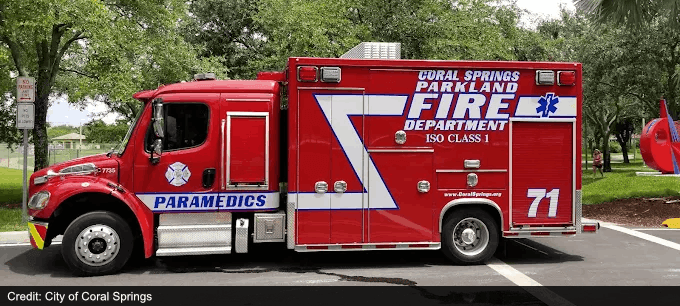
The Coral Springs-Parkland Fire Department recently ranked among the nation's top-10-performing agencies for cardiac arrest survival, achieving outcomes that significantly exceeded both state and national averages.
But the most interesting number in the report may not be the ranking itself.
When most people think about emergency response, they picture what happens after professionals arrive.
The ambulance pulls up. Paramedics begin treatment. Firefighters take action.
But recent cardiac arrest data from Coral Springs-Parkland Fire Department suggests that some of the most important moments may occur before any of that happens.
The department reported a 23.6% survival-to-discharge rate for cardiac arrest cases in 2025, more than double the national average and well above Florida's statewide rate.
While those numbers reflect the work of trained professionals, another statistic stands out.
When bystanders performed CPR or used a defibrillator before emergency crews arrived, 75% of patients survived and were discharged from the hospital.
That figure points to something larger than emergency response alone.
A Different Kind of Public Infrastructure
Most public infrastructure is easy to recognize.
Roads. Parks. Traffic signals.
Emergency preparedness often operates differently.
Many residents rarely think about CPR training, automated external defibrillators, emergency dispatch systems, or the steps that occur between a 911 call and the arrival of first responders.
Yet those systems can shape outcomes during the most critical minutes of an emergency.
Coral Springs has invested in public-access defibrillators, placing units in outdoor cabinets at parks and public spaces throughout the city.
According to the department, residents have already used some of those devices during actual emergencies.
The value of those investments extends beyond the equipment itself. The goal is to make lifesaving action possible before professional help arrives.
The Community Layer
Emergency response is often viewed as something professionals provide.
Cardiac arrest highlights a different reality.
In many situations, nearby residents become part of the response.
A family member begins CPR.
A neighbor retrieves an AED.
A bystander calls 911 and follows dispatcher instructions.
The chain of survival begins before paramedics take over.
The department's data suggests those early actions can have a significant impact on outcomes.
That does not diminish the importance of firefighters, paramedics, emergency dispatchers, or hospital staff.
Instead, it reveals how many parts of the system must work together.
What This Reveals
The department's national ranking is certainly an accomplishment. But the data may also reveal something broader about how emergency preparedness works in modern communities.
Success is not determined solely by how quickly professionals arrive.
It is also influenced by whether ordinary residents are equipped, willing, and able to act during the first few minutes of an emergency.
The strongest emergency response systems may not simply be the ones with skilled professionals.
They may also be the ones that make it easier for communities to help themselves while professional help is on the way.
----------
Editor’s note: This piece was selected and adapted for Coral Springs Insider to provide local context and perspective on an issue relevant to our community. |
0 Comments
Join the conversation
Be the first to comment
Share your thoughts above.