
What Cybersecurity Has to Do With Coral Springs' Drinking Water |
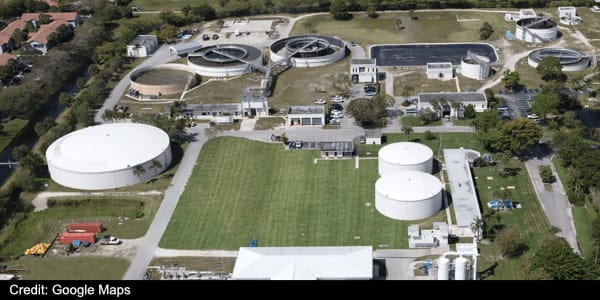
Coral Springs wants to replace an aging communications system at its Water Treatment Plant that cannot support encryption, revealing an increasingly digital layer behind a service residents experience as entirely physical.
Turn on a faucet and water comes out. Nothing about that ordinary experience feels particularly digital.
Residents don't see computer networks or radio communications. They see water.
But behind the pipes, pumps and treatment equipment that make the service possible is another kind of infrastructure: technology that allows different parts of a water system to communicate, report conditions and help operators monitor what is happening.
Coral Springs now wants to replace one piece of that invisible system.
And the reason helps explain why maintaining physical infrastructure increasingly requires maintaining digital infrastructure, too.
The Equipment Residents Never See
Coral Springs has requested state funding to replace an aging Supervisory Control and Data Acquisition, or SCADA, radio telemetry system used at its Water Treatment Plant.
The project would cost an estimated $170,000, with the city seeking $85,000 from the state and providing the remainder locally.
According to the city's funding request, the existing system has reached the end of its useful life and does not support encryption.
The proposed replacement would provide encrypted communications between remote water facilities, treatment processes and monitoring systems.
That description can sound highly technical. Its purpose is easier to understand.
A water system doesn't consist of one piece of equipment sitting in one building.
Different facilities and equipment have to be monitored and operated as parts of a larger system.
Telemetry helps information move between those pieces.
When Physical Infrastructure Has a Digital Layer
Think about the infrastructure residents normally associate with drinking water.
Wells bring water from underground.
A treatment plant processes it. Pumps help move it. Pipes carry it to homes and businesses.
Those physical components remain fundamental.
But modern utilities also use control and monitoring technology to help operators understand what those physical systems are doing. SCADA systems can allow utilities to remotely monitor automated treatment and distribution processes.
That means information moving between equipment becomes part of operating the physical system itself.
And once important operational information is moving digitally, protecting those communications becomes another infrastructure responsibility.
The water isn't digital. Part of what helps operators manage the system is.
Why Encryption Enters the Picture
Encryption is essentially a way of making information unreadable to someone who isn't authorized to access it. For residents, it's familiar in other settings.
Banks protect financial information. Websites protect transactions. Phones protect communications.
The same basic principle matters when digital communications are connected to critical infrastructure.
Coral Springs says its existing telemetry equipment doesn't support encryption and that replacing it with an encrypted system would better secure communications among remote water facilities, treatment processes and monitoring systems.
That does not mean someone has hacked the Coral Springs water system.
There is no indication in the city's funding request that drinking water has been compromised or that Coral Springs has experienced a cyberattack involving this equipment.
This is a modernization and prevention project.
The city has aging technology with a security limitation and wants to replace it before that limitation becomes a larger problem.
Water Utilities Are Having the Same Conversation Nationally
Coral Springs isn't confronting the digital side of water infrastructure in isolation.
Cybersecurity has become an increasingly important issue for water and wastewater utilities around the country.
The U.S. Environmental Protection Agency said it identified cybersecurity vulnerabilities at 277 water systems during 2025 and worked with those utilities on measures including stronger authentication and access controls.
Federal agencies have also warned that operational technology used by drinking-water and wastewater systems has become a target for cyber threats.
The concern isn't simply whether someone could access a computer.
Operational technology can be connected to the equipment and processes utilities use to monitor and manage physical systems.
That is why cybersecurity is increasingly discussed alongside more familiar infrastructure concerns such as equipment reliability, emergency power and natural disasters.
What Happens When the Digital Layer Disappears?
One of the clearest illustrations came from an EPA exercise for water utilities in 2026.
The scenario asked utilities to consider how they would maintain essential operations as telecommunications, internet access and remote SCADA connectivity became unavailable. That's revealing.
A generation ago, residents thinking about water-system resilience might have imagined a broken pipe, failed pump, hurricane or power outage.
Those risks haven't disappeared.
But utilities now have another category to prepare for: losing access to the digital systems that help operators see and control what is happening across their physical infrastructure.
The technology creates capabilities. It also creates dependencies that have to be protected and planned around.
Replacing Something Before Residents Notice It
There is another reason the Coral Springs project is easy to overlook. If the replacement works as intended, most residents may never notice it.
There is no new park to visit. No new building to walk into. No road that suddenly looks different.
The project involves equipment most residents probably didn't know existed.
That is common with infrastructure. Its success is often measured not by what residents notice, but by what they don't.
A pump keeps working. A signal reaches its destination.
An operator receives the information needed to monitor a system. Water continues coming from the faucet.
Preventive infrastructure can be almost invisible precisely because its purpose is to keep ordinary things ordinary.
A Different Meaning of Infrastructure
Coral Springs' proposed telemetry replacement is relatively small compared with the multimillion-dollar projects that usually attract attention.
But it illustrates a larger change in what cities have to maintain. Infrastructure still means concrete, pipes, pumps, roads and buildings.
Increasingly, it also includes the technology connecting and monitoring those physical systems.
That technology ages. It becomes obsolete.
Its security standards change. And eventually it has to be replaced just as physical equipment does.
Residents may never see the radio telemetry system at the Coral Springs Water Treatment Plant. They don't need to.
What matters is what the project reveals about the systems around them.
You can see a broken pipe. You can't see an unencrypted radio signal. Increasingly, a city has to protect both.
----------
Editor’s note: This piece was selected and adapted for Coral Springs Insider to provide local context and perspective on an issue relevant to our community. |
0 Comments
Join the conversation
Be the first to comment
Share your thoughts above.