
What Happens When a Shopping Center Reaches the End of Its Original Purpose? |
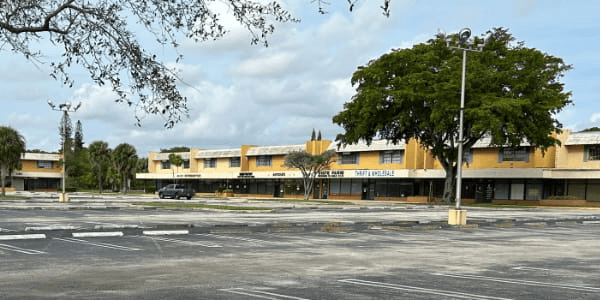
Most residents have probably driven past the shopping center at the northwest corner of University Drive and Sample Road hundreds of times.
For many, it has become part of the background.
Not a destination. Not a landmark people actively discuss.
Just one of those familiar places that quietly occupies a corner of the community's mental map.
Now part of that center is expected to be demolished as construction moves closer for City Village West, the first phase of a long-planned mixed-use redevelopment that will bring apartments, restaurants, retail space, and a parking garage to the site.
At first glance, this looks like a straightforward development story.
An aging property is being replaced with something newer.
But the more interesting story may be what this project reveals about the stage of life Coral Springs has entered as a community.
A Different Kind of Growth
For much of South Florida's history, growth usually meant expansion.
New neighborhoods appeared where fields once existed.
New shopping centers were built on undeveloped land.
New roads connected places that previously felt distant.
Communities grew by adding. Increasingly, that's no longer the primary challenge.
Today, many established cities are confronting a different question: What should happen to properties that were built for an earlier era but no longer fit current needs?
The City Village project sits squarely within that conversation.
The site isn't vacant. It isn't abandoned. It isn't failing in any dramatic way.
Instead, it represents something many mature communities eventually encounter: land that has become more valuable for what it could become than for what it currently is.
The Changing Role of Commercial Space
One detail stands out in the redevelopment plans. The replacement is not another traditional shopping center.
Instead, the first phase combines approximately 300 residential units with restaurant, retail, and public parking components.
The second phase would add even more commercial activity. That shift reflects changes occurring well beyond Coral Springs.
Retail centers built decades ago were designed around different habits. People shopped differently.
Worked differently.
Spent leisure time differently.
Many commercial properties were created during an era when separating housing, shopping, dining, and entertainment into distinct destinations was considered the ideal suburban model.
Today, preferences often look different. Many people value convenience, walkability, and places where multiple activities can happen within the same area.
Developers, businesses, and cities increasingly respond to those preferences. Projects like City Village emerge from that reality.
What Residents May Be Noticing
Even residents who have never followed a planning board meeting may have observed a subtle pattern.
Some of the most visible development activity in Coral Springs is no longer occurring on empty land. Instead, it often involves reimagining properties that already exist. That distinction matters.
It suggests Coral Springs is entering a more mature phase of community development.
The city is no longer primarily deciding where growth should occur. Increasingly, it is deciding what existing places should become.
That is a different kind of decision. And often a more complicated one.
Every redevelopment project involves balancing memory, familiarity, economics, community needs, and future opportunities.
The Familiarity Factor
There is another layer to these projects that rarely appears in development proposals.
Familiar places carry history. Residents remember businesses that occupied certain spaces. They remember where they attended classes, met friends, ran errands, or visited restaurants.
Even when a property no longer feels especially important, it remains part of how people understand their community. Redevelopment inevitably changes that relationship.
The result is often a mix of anticipation and nostalgia.
Something new becomes possible. Something familiar disappears.
Neither reaction is necessarily wrong. Both are part of how communities renew themselves over time.
What This Could Mean Going Forward
The significance of City Village may ultimately extend beyond this one intersection.
Projects like this raise broader questions about how Coral Springs will continue adapting as it matures.
Which aging commercial properties remain useful as they are? Which should be renovated? Which should be reimagined entirely?
The answers will help shape how residents experience the city in the years ahead.
The demolition of one building may seem like a small event. But it points toward a much larger reality.
Some of the places that defined Coral Springs during earlier decades are gradually giving way to a new generation of spaces designed for different expectations, different habits, and a different version of suburban life.
----------
Editor’s note: This piece was selected and adapted for Coral Springs Insider to provide local context and perspective on an issue relevant to our community.
|
0 Comments
Join the conversation
Be the first to comment
Share your thoughts above.