
What Your Coral Springs Property Tax Bill Doesn’t Show You |
Most homeowners experience property taxes in one very specific way.
A bill arrives. There is a number attached to your home, another number representing its taxable value, and eventually a total telling you how much you owe.
What happens after that money leaves your household is considerably harder to see.
That may become an important question for Coral Springs residents this fall.
Florida voters will consider a constitutional amendment in November that would make several significant changes to property taxation, including expanding homestead exemptions from non-school property taxes.
Coral Springs estimates the changes could reduce the city's annual property-tax revenue by approximately **$14.5 million in 2028** and **$26.9 million in 2029**.
Those are large numbers.
But they don't necessarily tell residents what the issue means. For that, it helps to look at property taxes from the opposite direction.
One Bill, Different Destinations
One reason property taxes can be confusing is that the amount appearing on a homeowner's tax bill isn't simply a payment to the City of Coral Springs.
Different taxing authorities levy property taxes for different purposes. That distinction is especially relevant to the proposed constitutional amendment because some of its major homestead-exemption changes apply to **non-school property taxes**.
The Legislature's official summary says qualifying homeowners who established permanent residence by the end of 2026 would receive an exemption from non-school ad valorem taxes of up to $150,000 in assessed value beginning in 2027 and up to $250,000 beginning in 2028, with inflation adjustments beginning later.
Different provisions would apply to homeowners establishing homestead after January 1, 2027.
The amendment would also reduce the maximum annual assessment increase on non-homestead residential and non-residential property from 10% to 5%.
If at least 60% of voters approve the amendment, it would take effect January 1, 2027.
For homeowners, those provisions are naturally viewed through one question:
For Coral Springs, there's another:
What Property Taxes Look Like From City Hall
Coral Springs describes property taxes as a primary source of funding for municipal services.
The city's list is broader than many residents might expect.
It includes:
That doesn't mean each of those services would be cut if the amendment passes. The city hasn't established that.
What the list does demonstrate is something that's easy to overlook when looking at a tax bill:
The Services That Disappear Into Everyday Life
Some city services are easy to recognize as government services.
Police. Fire rescue. Road construction.
Others blend so completely into community life that their funding source isn't something residents normally think about.
A child playing in a recreation program doesn't experience municipal finance. A resident walking through a maintained park doesn't see a revenue stream.
Someone attending a community event doesn't necessarily think about which portion of city government helped make it possible.
A senior participating in a city program is probably thinking about the activity, not the property-tax structure supporting municipal operations.
That's part of what makes the November discussion interesting.
Taxes and services usually appear in completely different parts of our lives.
One arrives as a cost. The other arrives as part of the community around us.
The ballot question puts them into the same conversation.
The Other Side of Tax Relief
The argument for property-tax relief is easy to understand. Housing costs have increased considerably, and homeowners experience insurance, maintenance, association fees and taxes as part of the overall cost of keeping a home.
Reducing property taxes leaves more money with property owners.
The proposed amendment would substantially increase homestead exemptions from certain non-school property taxes for qualifying homeowners while also changing assessment limits for other property.
But municipal budgets operate on the other side of that equation. Money no longer collected from taxpayers is also revenue no longer available to local government.
That's why Coral Springs is projecting a financial effect. The city estimates approximately:
By 2029:
Those figures are projections rather than a list of predetermined cuts.
How Coral Springs would ultimately respond would depend on future budgets, revenue, priorities and decisions by city leaders.
That's an important distinction.
The amendment doesn't come with a list saying which Coral Springs programs would disappear.
Instead, it potentially changes the amount of money available and leaves future city leaders to determine how to operate within that reality.
A Question About Priorities
That may ultimately be the more useful way for residents to understand what's ahead.
The November ballot question isn't simply about whether property taxes are too high or city services are valuable.
Both ideas can be true to different residents at the same time.
A homeowner can reasonably want a lower tax bill. That same homeowner can also value parks, emergency services, roads, recreation programs and community amenities.
The difficult part is connecting the two.
Local government budgeting is ultimately an exercise in priorities because resources are finite.
When revenue changes significantly, those priorities become easier to see.
Those aren't questions the amendment itself answers. They're questions communities eventually have to answer when deciding what they expect local government to provide.
Seeing the Bill Differently
There is still plenty that residents will need to understand before November, including how the amendment would affect individual properties.
The financial effect won't necessarily be identical for every homeowner because property values, exemptions and individual circumstances differ.
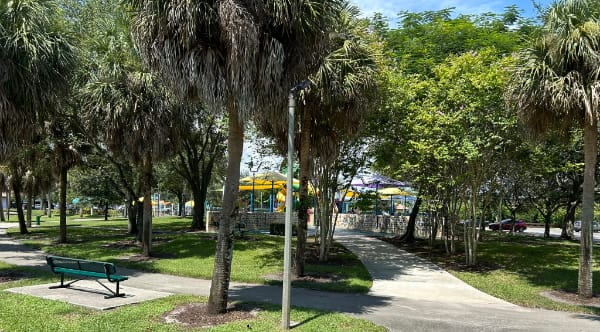
But Coral Springs residents don't have to wait until Election Day to understand the other half of the equation. Look around.
Those things don't appear as individual line items when a homeowner thinks about the cost of property taxes. Yet they're part of the broader conversation about how a community pays for the things residents expect it to provide.
That's why the November decision may ultimately be about more than a number on a tax bill.
It's also an opportunity to understand what sits on the other side of that number.
Which Coral Springs services matter most to you when you think about what your property taxes support? Share your thoughts below.
----------
Editor’s note: This piece was selected and adapted for Coral Springs Insider to provide local context and perspective on an issue relevant to our community.
|
4 Comments
Join the conversation
I support reducing property taxes because homeowners are being squeezed from every direction, including insurance, maintenance, association fees, utilities, and the rising cost of simply staying in their homes. City services matter, and no one wants to see essential services weakened, but that does not mean government should automatically expect residents to absorb higher and higher costs without a serious review of spending, priorities, and efficiency. The article correctly points out that property-tax revenue supports many visible and invisible parts of community life. However, that is exactly why this discussion is important. Tax relief should force a more disciplined conversation about what is truly essential, what can be done more efficiently, and where local government can reduce costs before asking homeowners to keep paying more. Residents deserve strong public safety, well-maintained roads, parks, and services, but they also deserve a tax structure that recognizes the financial pressure on families, seniors, and long-time homeowners trying to remain in the community they helped build.
Thanks for weighing in, Dan. You raise an important part of the discussion—the financial pressures homeowners are facing alongside the need to maintain the services residents expect. I appreciate you adding your perspective to the conversation.
The article leaves out the uptick in revenues created by home sales at much higher prices. Broward county has shown a 52% increase in levies collected over a few years. All local governments must direct taxes to core services first. That means that unless the local Government stops handing out grants to successful businesses that are unwarrented, find ways to cut costs (e.g. do more online electronically and many services could easily be integrated with technology and AI to reduce cost but no. All we ever hear is the sky is falling. Well, sorry, heard the same story from the same playbook years ago. Voting Yes means we get much needed relief and gives the community back some control. It is time for local politicians to be fiscally responsible and stop spending ridiculous amounts of money on pet projects. When something is needed, politicians and their committees must do their homework and receive numerous bids and provide that information and analysis instead of awarding bids without full transparency. Often, there is no information provided to the masses and money is simply spent. Time for change!
Thanks for sharing your perspective. You raise another part of the property tax discussion—the growth in revenues as property values rise and homes change hands—and that's certainly part of the larger conversation about taxes, spending and the level of services residents expect. These are exactly the kinds of questions I hoped the article would get people thinking and talking about. I appreciate you adding your perspective to the discussion.