
The Next Big Change in Coral Springs May Be How Neighborhoods Are Built |
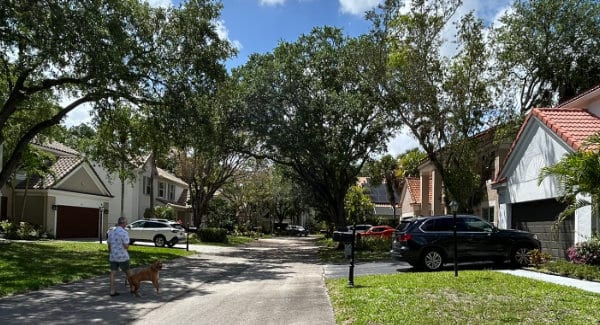
A new Broward County resilience plan offers a glimpse of how communities across the county—including Coral Springs—could gradually rethink streets, parks, landscaping, and neighborhood design over the coming decades.
Ask someone how communities prepare for heavier rain or future flooding, and you'll probably hear familiar answers.
Build bigger drainage systems.
Raise seawalls.
Install more pumps.
Those ideas are certainly part of Broward County's newly released Countywide Resilience Plan.
But after spending more than 100 pages laying out its vision for the next several decades, one message rises above the engineering.
The plan isn't simply about protecting neighborhoods.
It's about gradually redesigning them.
That may be one of the biggest shifts hiding inside the document.
Looking Beyond Traditional Infrastructure
For generations, suburban neighborhoods have largely been designed around familiar priorities.
Wide streets move traffic efficiently. Parking lots maximize convenience. Sidewalks, landscaping, drainage systems, parks, and utilities each serve their own separate purpose.
The resilience plan imagines something different.
Instead of asking only how neighborhoods can move people and cars, it increasingly asks how every part of a neighborhood can also help manage water, reduce heat, and make communities more adaptable over time.
That shift shows up throughout the recommendations.
The plan discusses expanding green streets that...
None of those ideas are presented as overnight projects.
In fact, the document repeatedly describes resilience as a multi-decade effort that will evolve as: - neighborhoods redevelop,
More Than Emergency Preparedness
That distinction matters.
Many residents hear the phrase "resilience plan" and imagine emergency preparation.
This plan spends far more time describing how ordinary community design may gradually change. Remember that Coral Springs looked very different 70 years ago when compared to today.
A parking lot might someday serve double duty by helping absorb stormwater.
Street landscaping could become part of neighborhood drainage. Trees may increasingly be valued not only for shade and appearance, but also for helping reduce heat.
Public spaces could be designed to perform several functions at once instead of just one.
Most people may never notice those changes individually.
Over years, however, they could collectively reshape how neighborhoods look and function.
Changes You May Notice Over Time
That's already happening in many newer developments around Florida, where rain gardens, bioswales, permeable paving, and expanded landscaping are becoming more common features rather than unusual ones.
The Broward plan suggests that approach could become more intentional and more widespread as communities replace aging infrastructure and plan future redevelopment.
For Coral Springs residents, that doesn't necessarily mean today's neighborhoods will suddenly be rebuilt.
Local governments would decide which recommendations to adopt, when to adopt them, and how to pay for them.
Many proposals would require years of planning, public discussion, engineering, and funding before becoming reality. But the broader direction is becoming easier to recognize.
Communities are beginning to think differently about the spaces people use every day.
A Different Way of Building Communities
A street isn't only transportation. A park isn't only recreation. A parking lot isn't only parking.
Increasingly, each becomes part of a larger system that helps neighborhoods respond to changing conditions while continuing to support everyday life.
That's a subtle shift.
Yet it may prove to be one of the most visible changes residents experience over the coming decades.
The next generation of neighborhood improvements may not always announce themselves with dramatic new buildings or major public works projects.
Sometimes they'll appear as a slightly different streetscape.
A larger tree canopy. A redesigned drainage swale. A parking area that looks a little different than it did a generation ago.
Individually, those changes may seem ordinary.
Together, they represent a different way of thinking about how communities are built.
And that may be the most interesting story hidden inside Broward County's resilience plan.
Which changes would you most welcome in your neighborhood—more trees, better drainage, redesigned streets, or something else? Share your thoughts below.
----------
Editor’s note: This piece was selected and adapted for Coral Springs Insider to provide local context and perspective on an issue relevant to our community.
|
0 Comments
Join the conversation
Be the first to comment
Share your thoughts above.